

VAT Return Belgium: Deadlines and Process | Transmac
Read More

Accounting outsourcing means working with an external team that handles bookkeeping, reporting, and financial data consistently, instead of managing it internally when there’s time.


Supporting businesses across the UK, Belgium, and international markets


Accounting doesn’t usually break all at once. It gradually becomes harder to maintain as activity increases, and over time, financial data stops reflecting what’s actually happening in the business.

Transactions and financial records are recorded later than they should be, which creates a gap between actual activity and reported data. Over time, this makes it harder to rely on the numbers in day-to-day decisions.
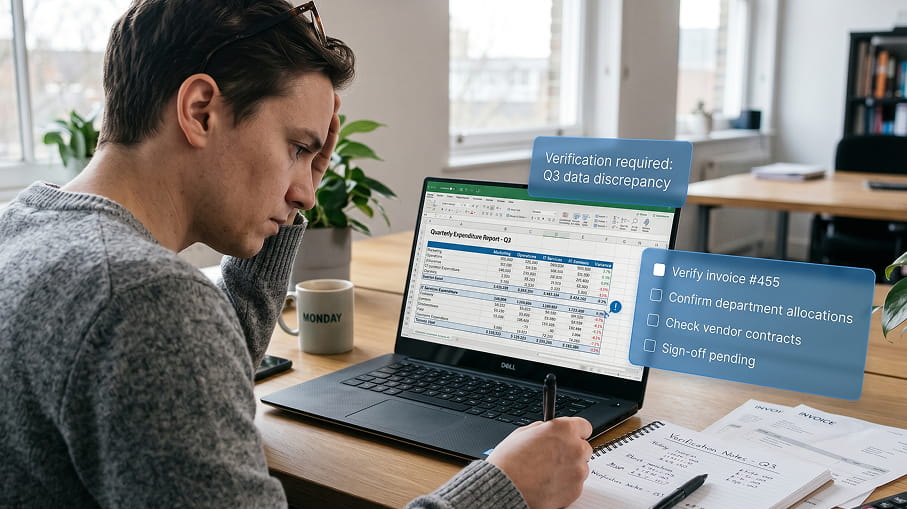
Before using any report, someone needs to confirm that everything is recorded correctly. This adds extra steps and slows down decision-making, especially as the business grows.

Instead of working with current financial data, time is spent correcting missing entries, delayed transactions, and inconsistencies. What should be a simple process turns into constant rework.
When accounting outsourcing is introduced, the focus shifts from catching up to maintaining consistency. Financial data is handled as part of daily operations, so records stay aligned and reporting no longer depends on corrections.

Transactions are recorded as they happen, without creating gaps that need to be fixed later.
Financial reports are based on up-to-date data and don’t require additional verification before use.
Instead of fixing past work, the focus shifts to working with financial data that is already accurate.
When accounting is handled consistently, financial data becomes easier to rely on, reporting stays aligned with actual activity, and less time is spent correcting past work.
Transactions and financial records are handled consistently, so accounting reflects what’s actually happening in the business instead of falling behind over time.
When financial data is kept up to date, reports reflect the current state of the business and can be used without needing additional checks or corrections.
A structured accounting process reduces delays and inconsistencies, so there’s less need to go back and fix missing or inaccurate data.
Accounting outsourcing follows a structured approach that keeps financial data aligned with daily business activity. Instead of relying on delayed updates or end-of-period adjustments, accounting is managed continuously as the business operates.

It starts with understanding how accounting is currently handled, how financial data flows, and where delays or inconsistencies begin to appear over time.

A consistent structure is introduced for handling financial data, reporting, and records, so everything follows a clear and repeatable flow.

Accounting is handled as activity happens, keeping records aligned without delays or gaps between transactions and reporting.

Financial data remains consistent as the business grows, so reports reflect the current state without requiring adjustments or rework.
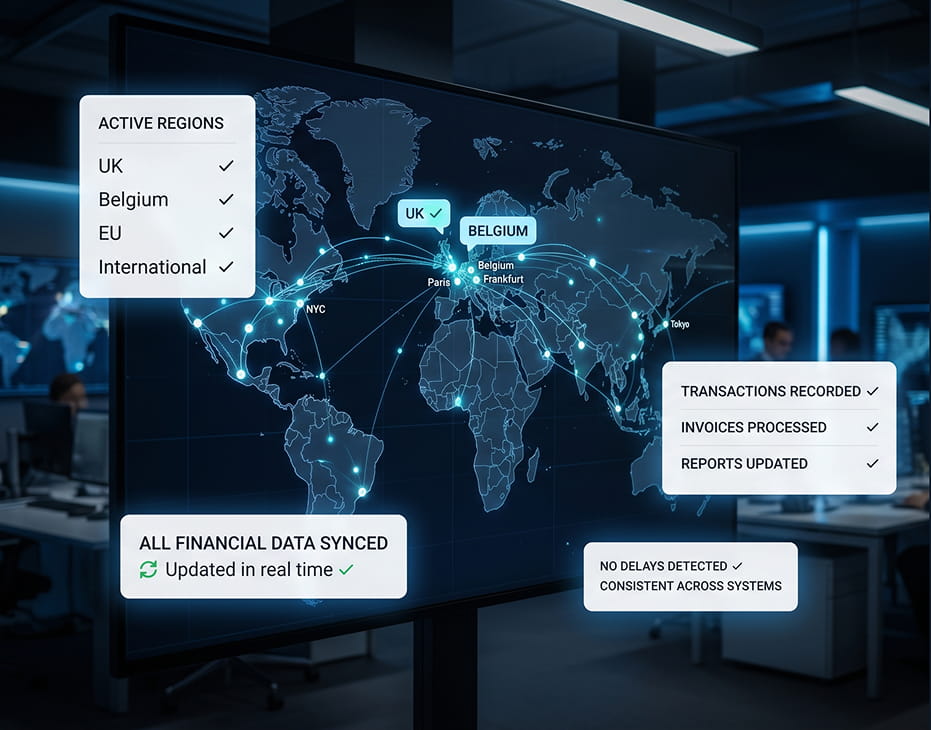
Transmac supports businesses across the UK, Belgium, and international markets, providing accounting outsourcing that stays aligned with daily operations regardless of location.
Financial data is handled through consistent processes, so reporting remains reliable across different systems, teams, and regions.
As operations grew, financial processes needed to stay consistent. This case study shows how Transmac keeps workflows structured and data aligned.
View Case Study


Articles based on day-to-day accounting processes, common issues businesses run into, and how they are handled in practice.
Get clarity on our services, processes, and benefits. We’ve collected the most frequent questions from our clients so you can quickly find the information you need.

Transmac provides outsourcing solutions in administrative support, bookkeeping, and accounting services. We help businesses reduce costs, stay compliant, and improve efficiency through accurate and timely data management.
Businesses usually consider outsourcing when transaction volume increases and internal processes become inconsistent. This often happens when financial data is delayed, reports require adjustments, or multiple systems are no longer aligned.
Yes, especially for small and growing businesses. As operations expand, maintaining consistent bookkeeping internally becomes more difficult, and outsourcing helps ensure that financial records remain accurate over time.
No, it supports existing teams rather than replacing them. Internal teams can focus on financial decisions, while the bookkeeping process is handled consistently in the background.
Accuracy improves through consistency. When transactions are recorded continuously and data is structured properly, there are fewer errors and less need for corrections during reporting.
Automation can handle repetitive tasks such as data entry and categorization, but it still depends on structured processes and validation. Without that, automated systems can still produce inaccurate results.